TQQQ Strategy Unlocked: How Korean FIRE Investor ‘Laore’ Tamed Leveraged ETF Volatility

“If you can’t control your emotions during a 70% drawdown, you shouldn’t hold leveraged ETFs. But what if you could turn that brutal volatility into a systematic profit engine?”
For retail investors pursuing Financial Independence, Retire Early (FIRE), capturing the long-term upward trajectory of the US stock market is a foundational strategy. Among high-growth options, 2x and 3x leveraged ETFs like QLD and TQQQ attract significant attention from investors seeking accelerated capital growth.
However, holding 3x leveraged products through severe market downturns can be devastating due to volatility decay (compounding erosion during sideways or choppy markets).
To solve this exact dilemma, a prominent Korean FIRE investor known online as Laore (라오어) developed a mathematical trading system called the “Infinite Purchase Method” (무한매수법). This systematic Dollar-Cost Averaging (DCA) strategy turns market swings into compounding gains while removing emotional bias from trading.
1. The Core Vehicles: Understanding QLD and TQQQ
The Infinite Purchase Method primarily utilizes leveraged ETFs tied to the Nasdaq-100 Index:
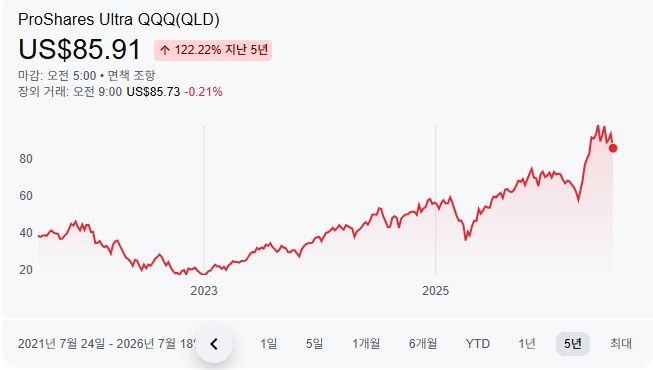
- QLD (ProShares Ultra QQQ): Seeks 2x daily returns of the Nasdaq-100. A 1% daily shift in the index results in a 2% shift in QLD. It provides a balanced alternative for growth investors who want leverage without extreme 3x exposure.
- TQQQ (ProShares UltraPro QQQ): Seeks 3x daily returns of the Nasdaq-100. While it generates massive upside during sustained bull runs, holding TQQQ through prolonged sideways or falling markets causes severe volatility decay, requiring strict position management.
2. Mechanics of the ‘Infinite Purchase Method’
Rather than trying to time market bottoms or tops, Laore’s method uses a rules-based system to lower cost bases during drawdowns and lock in gains automatically.
The 3 Core Rules of Execution:
- Capital Division (40–50 Tranches):Divide your total allocated trading capital into at least 40 to 50 equal daily installments. Never deploy 100% of your cash at once. Maintaining cash reserves ensures you can continue buying aggressively even during extended pullbacks.
- Systematic Orders (LOC – Limit On Close):Set daily Limit On Close (LOC) orders every trading day. Half of the daily allocation buys if the closing price is below your portfolio’s average cost basis (lowering your cost basis), while the other half buys at the market price to maintain steady accumulation.
- 10% Automated Profit Target:Set an automated sell order when the total portfolio hits a 10% net gain. Once the target is reached, the entire position is liquidated to lock in cash profits, and the cycle resets back to Day 1 with fresh tranche divisions.
3. Key Takeaways for US Investors Pursuing FIRE
Leveraged trading is a double-edged sword: it can accelerate your FIRE timeline during bull markets, but without strict risk parameters, it can severely erode net worth.
The Infinite Purchase Method functions as a behavioral hedge against the classic retail trap: “buying high out of FOMO and selling low out of panic.” By automating entry and exit rules based on mathematical probabilities rather than market news, investors can navigate market swings with clarity and discipline.
Start with a small test allocation to build muscle memory around daily LOC executions before scaling capital.
To hear directly from the creator about how he navigated extreme leverage drawdowns and managed a multi-million dollar portfolio, check out Why I Bet 1.5 Billion KRW on TQQQ: Laoer’s Story.
This video provides valuable real-world context on how Laore built his multi-million dollar TQQQ position, managed downside risk during market crashes, and applied his rules-based strategy to achieve financial independence.
Practical Risk Management: Navigating Prolonged Bear Markets
While the Infinite Purchase Method provides a disciplined framework for managing drawdowns, long-term success requires a clear understanding of its operational boundaries during extended bear markets.
When deploying a leveraged ETF strategy like TQQQ or QLD within a FIRE portfolio, keep these essential risk management principles in mind:
- Managing Cash Drag Wisely: Dividing capital into 40 to 50 tranches means a significant portion of your portfolio remains in cash during early cycle stages. While this cash cushion slightly lowers returns during vertical bull runs, it serves as the exact insurance policy that prevents total portfolio ruin during deep market corrections.
- Maintaining Strict Tranche Discipline: A common trap for novice traders is increasing tranche sizes after experiencing a series of quick 10% profit resets. Maintaining strict, uniform tranche sizing ensures that your downside risk exposure remains mathematically controlled, regardless of market euphoria.
- Blending QLD and TQQQ for Smoother Equity Curves: For investors seeking growth with reduced volatility decay, blending 2x QLD with 3x TQQQ—or temporarily shifting higher allocation toward QLD during macroeconomic uncertainty—provides a balanced compromise between risk and reward.
The Bottom Line: Automating Your Financial Freedom
Achieving Financial Independence through leveraged ETFs is as much a psychological test as it is a financial strategy. Unsystematic, emotional trading of 3x leveraged products almost always leads to selling at market bottoms during peak panic.
By replacing emotional discretion with a mathematical, rules-based algorithm like Laore’s Infinite Purchase Method, investors can turn market volatility from a threat into an asset. Following a systematic process enables you to capture the long-term compounding power of the Nasdaq-100 while maintaining the emotional discipline required for sustainable, long-term wealth creation.